
⏱️ Estimated Read Time: 4 minutes
Quick Answer
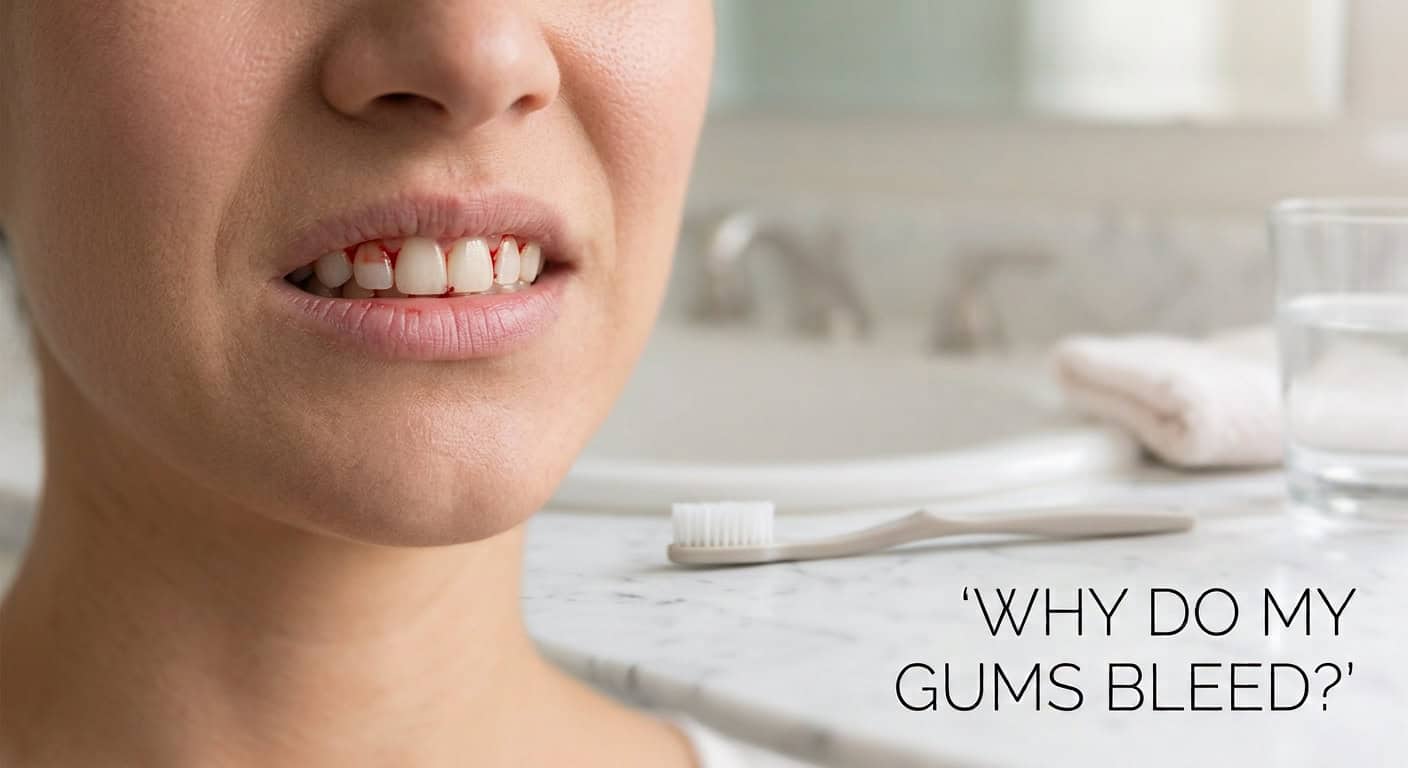
Q: Why do my gums bleed when brushing or flossing?
A: Bleeding gums are rarely caused by brushing too hard; they are almost always a symptom of gingivitis—an infection caused by accumulated bacterial plaque along your gumline. According to Dr. Navjot Kaur Sekhon, DDS, FAGD at Sekhon Dental – Dentist Agoura Hills, bleeding gums are your mouth’s distress signal that plaque is actively irritating your tissue, which requires professional evaluation to prevent irreversible bone loss.
Imagine washing your hands in the morning and noticing blood trickling from under your fingernails. You wouldn’t just shrug it off, rinse with water, and hope it goes away by tomorrow, would you? You’d want to know why it was happening immediately.
Yet, millions of adults spit pink into the bathroom sink every single morning and think: “Oh, I must have brushed a little too hard today.”
Here is the inconvenient truth about oral health: Healthy gums do not bleed.
If you are noticing pink in the sink when you brush or floss, your body is sending an urgent alert. Let’s pull back the curtain on why this happens, why ignoring it is dangerous, and how you can reverse it before it turns into a permanent issue.
What Actually Causes Bleeding Gums?
The human mouth is home to billions of bacteria. When you eat, these micro-organisms feed on microscopic food debris and excrete a sticky, colorless film known as plaque.
If plaque sits undisturbed along your gumline for as little as 24 to 48 hours, it releases toxins that irritate your delicate gum tissue. Your body responds the only way it knows how to fight an infection: by sending extra blood to the area.
This causes your gums to become swollen, tender, and prone to bleeding at the lightest touch.
+------------------------------------+---------------------------------------------------------------+
| Stage 1: Plaque Accumulation       | Stage 2: Inflammatory Response                                |
+------------------------------------+---------------------------------------------------------------+
| • Sticky bacterial film settles    | • Blood vessels dilate to fight bacteria                      |
| • Touches delicate gum tissue      | • Gums turn red, puffy, and sensitive                         |
| • Hardens into tartar (calculus)   | • Brushing or flossing triggers bleeding ("Pink in the sink") |
+------------------------------------+---------------------------------------------------------------+
The Hidden Danger: Gingivitis vs. Periodontitis
Most people think bleeding gums are just a minor inconvenience. In reality, bleeding is the dividing line between a problem you can easily reverse and a condition that causes permanent damage:
-
Stage 1: Gingivitis (Reversible): Inflammation is strictly confined to the soft gum tissue. Your tooth socket and jawbone are still completely intact. With professional cleanings and proper home care, gingivitis can be 100% cured.
-
Stage 2: Periodontitis (Irreversible): When gingivitis is ignored, the infection pulls away from the tooth, creating deep “pockets.” Bacteria settle beneath the gumline, where your toothbrush can’t reach, and begin destroying the surrounding bone structure that holds your teeth in place.
Clinical Fact: Periodontal disease is the number one cause of tooth loss in adults—far more common than severe cavities or physical injury!
3 Steps to Stop Bleeding Gums in Their Tracks
If you’ve noticed bleeding while brushing or flossing, don’t stop your daily routine! Quitting flossing because your gums bleed is actually the worst thing you can do, as it allows plaque to accumulate faster. Instead, take these 3 steps:
1. Upgrade to a Soft-Bristled Electric Toothbrush
Hard bristles don’t clean better; they just abrade delicate gum tissue. Use a soft-bristled toothbrush angled at a 45-degree angle toward the gumline to gently sweep plaque away.
2. Floss Daily (Before You Brush!)
Flossing dislodges the hidden bacterial colonies nestled between your teeth. If your gums bleed when you floss, it means those areas need more consistent, gentle cleaning—not less! Within 7 to 10 days of daily flossing, bleeding usually stops completely.
3. Get a Professional Dental Evaluation
Once plaque hardens into tartar (calculus), no toothbrush or floss on earth can remove it. Only a dental hygienist using specialized ultrasonic scaling instruments can clear away hardened deposits to allow your gums to heal.
Experience Honest, Undivided Care at Sekhon Dental
If you are dealing with bleeding gums, sensitive teeth, or simply need to catch up on your family’s routine oral wellness, we are here to help without judgment.
At Sekhon Dental – Dentist Agoura Hills, we treat every patient like family. We operate with a strict zero double-booking policy, meaning Dr. Navjot Kaur Sekhon, DDS, FAGD, and our dedicated clinical team focus 100% of their time and attention exclusively on you while you are in our chair.
Ready to protect your smile?
Call our welcoming Agoura Hills core team today or schedule your visit online!
-
Phone: (818) 991-5004
-
Location: Agoura Hills, CA 91301
-
Recognition: Voted Best Dentist by the Acorn (2024 & 2025) 🏆
P.S. Have you been putting off your routine dental cleaning because of a busy schedule? Because we never double-book, our appointments start right on time so you can get back to your day without sitting in a crowded waiting room! Call us at (818) 991-5004 to reserve your dedicated spot today.