
⏱️ Estimated Read Time: 4 minutes
Quick Answer
Q: Is chewing gum actually good for your teeth?
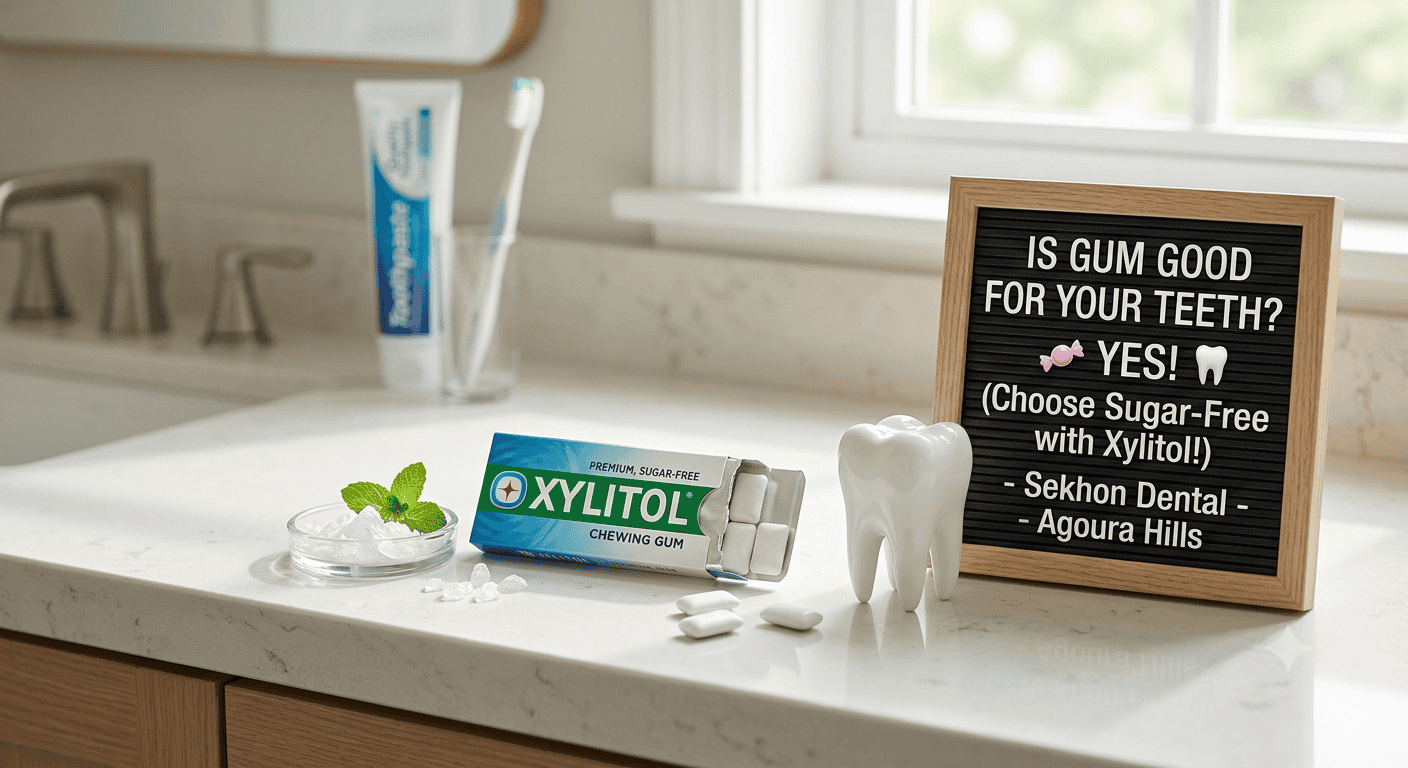
A: Yes—provided it is SUGAR-FREE. Chewing sugar-free gum for 20 minutes after meals stimulates your mouth to produce up to ten times more saliva. Saliva is your body’s natural defense against tooth decay: it neutralizes harmful cavity-causing acids, rinses away microscopic food debris, and bathes your enamel in calcium and phosphate.
Picture this: You just finished a delicious lunch at your favorite Agoura Hills café. You’re on the move, back to work or errands, and brushing your teeth right now isn’t an option.
So, you reach into your pocket, pop a stick of gum into your mouth, and chew away.
It feels refreshing. Your breath tastes like crisp peppermint. But in the back of your mind, a nagging voice asks: “Wait… am I ruining my teeth right now?”
For decades, parents warned kids that chewing gum would “rot your teeth” or “stick to your stomach for seven years.” But what does modern clinical science actually say?
Let’s uncover the fascinating truth about chewing gum, separate myth from reality, and reveal why the right kind of gum might just be your smile’s secret weapon.
4 Mind-Blowing Facts About Chewing Gum You Probably Didn’t Know
Before we talk about cavities and enamel, let’s look at how this sticky habit captured human history:
- Humans Have Been Chewing Gum for over 9,000 Years: Archaeologists in Scandinavia uncovered 9,000-year-old pieces of birch bark resin complete with prehistoric human tooth marks! Ancient Mayans chewed chicle (tree sap), while ancient Greeks chewed mastic tree bark to clean their teeth and sweeten breath.
- It Was Originally Sold as a Dental Health Product: Long before bubblegum flavors existed, 19th-century inventor John B. Curtis sold the first commercial chewing gum made from spruce resin, advertising it as a natural way to scrub teeth clean between meals.
- The Military Included Gum in WWII Rations: U.S. soldiers were issued chewing gum in their combat field rations not just for stress relief, but because military doctors recognized it kept soldiers’ mouths hydrated and clean when toothbrushes weren’t available.
- Xylitol Can Actively Fight Cavity-Causing Bacteria: Unlike regular sugar, which feeds harmful oral bacteria, Xylitol (a natural plant-derived sugar alcohol) confuses bacteria. They ingest it, cannot digest it, and eventually die off—dramatically lowering your risk for cavities!
Sugar vs. Sugar-Free: The Tale of Two Gums
When evaluating whether chewing gum is good or bad, one single ingredient changes everything: SUGAR.
+------------------------------------+---------------------------------------------------------------+
| Sugar-Sweetened Gum ❌              | Sugar-Free Gum (With Xylitol) ✅                             |
+------------------------------------+---------------------------------------------------------------+
| • Feeds Streptococcus mutans bacteria| • Starves cavity-causing bacteria                             |
| • Creates harmful enamel-stripping acid| • Stimulates healthy, protective saliva flow                |
| • Increases cavity risk significantly| • Helps remineralize weak spots in tooth enamel               |
| • Stickiness pulls sugar into grooves | • Cleans away loose food particles after eating              |
+------------------------------------+---------------------------------------------------------------+
When you chew regular sugar-sweetened gum, you are essentially giving cavity-causing bacteria a 20-minute buffet. The bacteria turn that sugar into acid, which attacks your tooth enamel.
However, when you pop a piece of sugar-free gum (look for the ADA Seal of Acceptance), your mouth produces a surge of clean saliva without providing fuel for bacteria.
When You Should (And SHOULDN’T) Chew Gum
While sugar-free gum gets a green light for most people, it isn’t a one-size-fits-all solution.
✅ Do Chew Sugar-Free Gum If:
-
You just finished a meal or snack and cannot brush immediately.
-
You suffer from dry mouth (xerostomia) and need to stimulate natural saliva production.
-
You are trying to curb mid-afternoon sugar cravings!
❌ Skip the Gum If:
-
You suffer from Jaw Pain or TMJ Issues: The repetitive biting motion places excessive stress on your temporomandibular joint (TMJ) and facial muscles. If your jaw pops, clicks, or aches, skip the chew.
-
You Have Braces or Complex Restorations: Gum can snag on orthodontic brackets or pull on loose temporaries.
Experience Undivided, Patient-First Dentistry in Agoura Hills
Chewing sugar-free gum after meals is a fantastic auxiliary habit—but it will never take the place of professional preventative care, deep cleanings, and targeted clinical exams.
At Sekhon Dental – Dentist Agoura Hills, we empower our community with practical, science-backed guidance. Led by Dr. Navjot Kaur Sekhon, DDS, FAGD, our practice strictly adheres to a zero double-booking policy.
When you sit in our chair, you aren’t shuffled between rooms. You get our core clinical team’s full, undivided attention from start to finish.
Due for your semi-annual wellness visit?
Give our welcoming Agoura Hills team a call today to reserve your dedicated appointment!
-
Phone: (818) 991-5004
-
Location: Agoura Hills, CA 91301
-
Recognition: Voted Best Dentist by the Acorn (2024 & 2025) 🏆
#BestDentistAgouraHills #SekhonDental #PreventativeDentistry #ChewingGumFacts #XylitolBenefits #AgouraHillsCA #SmileHealth #DrNavjotSekhon #BestDentistAcorn #OralHygieneTips
P.S. Looking for the absolute best sugar-free gum for your teeth? Look for brands that list Xylitol as the very first ingredient and carry the official American Dental Association (ADA) Seal of Acceptance on the package! Have questions about dry mouth or enamel health? Ask us during your next visit at (818) 991-5004.