
Estimated Read Time: 4 minutes
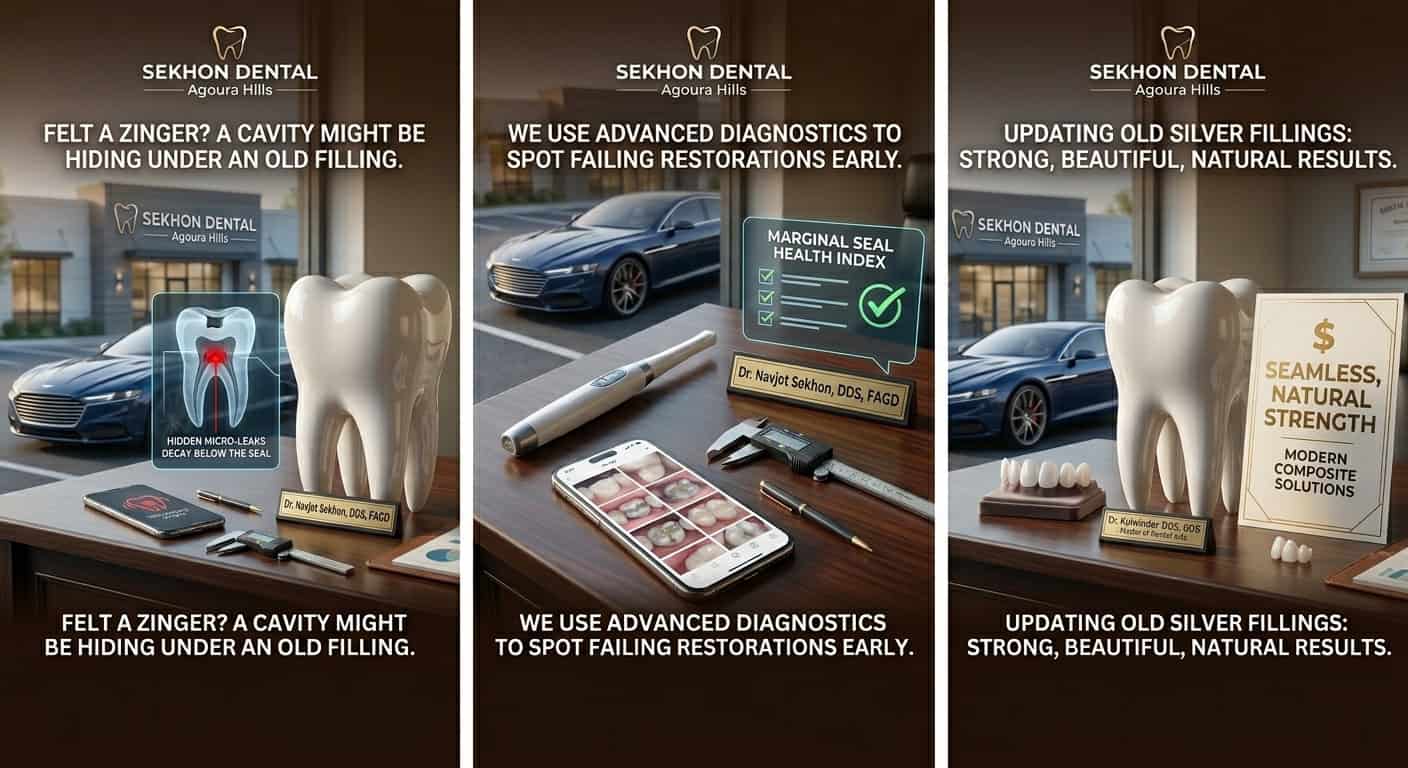
If you feel a sudden zinger of sensitivity while sipping cold water or eating lunch in Agoura Hills, your first thought might be a new cavity. However, for many adults, the real culprit is hiding beneath dental work completed years—or even decades—ago.
No dental restoration lasts forever. Everyday chewing pressure, temperature changes from hot coffee and cold drinks, and natural wear take a heavy toll on older restorations. When a filling breaks down, it leads to recurrent decay—a new cavity forming underneath or around the edges of an existing filling.
What Causes a Cavity Under an Existing Filling?
When a filling is initially placed, it forms a tight seal with your natural tooth structure to block out bacteria. Over time, that seal can degrade due to three main factors:
-
Micro-Leakage: As filling materials expand and contract from cold and hot temperatures, microscopic gaps develop between the tooth and the restoration.
-
Marginal Breakdown: The edges (margins) of older silver amalgam or composite fillings chip, crack, or wear down under daily stress.
-
Material Fatigue: The human jaw exerts up to 200 pounds of pressure per square inch while chewing. Over thousands of meals, dental materials naturally wear out.
Once that seal fails, oral bacteria enter the space underneath. Because this area cannot be reached with a toothbrush or dental floss, decay spreads inside the softer dentin layer—often without causing pain in its initial stages.
Symptoms of a Failing Dental Filling
In its early stages, recurrent decay rarely hurts. As the breakdown deepens toward the nerve of the tooth, you may notice key warning signs:
-
Sharp Temperature Sensitivity: Lingering sensitivity when drinking cold water or hot liquids.
-
Bite Discomfort: A sharp pain or discomfort when chewing crunchy or hard foods.
-
Visible Wear: A visible crack, chip, or dark border along the edges of the restoration.
-
Rough Texture: Feeling a jagged edge, gap, or loose surface with your tongue.
Why Early Detection Prevents Complex Dental Work
Ignoring a leaking filling is like driving on a flat tire—eventually, a minor issue turns into major mechanical damage.
When caught early during a routine dental exam, fixing recurrent decay is straightforward. Dr. Navjot Sekhon, DDS, FAGD, removes the worn restoration, clears away the localized decay, and places a strong, tooth-colored composite restoration to re-establish a sterile seal.
If left unaddressed, decay continues traveling toward the tooth’s inner pulp (the nerve center). What could have been resolved with a conservative filling replacement can quickly require:
-
A Dental Crown: Needed when too much natural enamel is lost to support a basic filling.
-
Root Canal Therapy: Required once bacteria invade the nerve chamber, causing infection.
-
Tooth Extraction: Necessary when the underlying natural structure is too severely compromised to save.
Replacing a worn filling early preserves up to 95% of your original tooth structure and protects your long-term health.
How We Detect Hidden Decay at Sekhon Dental in Agoura Hills
Because decay under a filling is hidden from plain view, relying on pain alone isn’t enough. At Sekhon Dental – Dentist Agoura Hills, we utilize modern diagnostic tools to catch failing restorations early:
-
High-Resolution Digital X-Rays: Clear imaging lets us inspect beneath existing metal or composite work to evaluate the underlying tooth density.
-
Intraoral Cameras: High-magnification digital photos allow you to see micro-cracks or worn margins on screen alongside Dr. Sekhon.
-
Zero Double-Booking Policy: Dr. Sekhon provides 100% undivided attention during your exam, ensuring every restoration is carefully inspected.
Frequently Asked Questions About Old Fillings
How long do dental fillings usually last?
On average, composite fillings last 7–10 years, while silver amalgam fillings can last 10–15 years. However, individual wear, grinding habits, and oral hygiene significantly impact longevity.
Can a cavity under a filling be fixed without a root canal?
Yes. As long as the decay is caught before it reaches the tooth’s inner pulp, Dr. Sekhon can remove the old filling, clear the decay, and place a new restoration without needing a root canal.
Is it safe to replace old silver amalgam fillings?
Yes. If an old amalgam filling shows signs of micro-leakage, cracking, or decay, it can be safely removed and replaced with a durable, natural-looking composite restoration.
Schedule Your Dental Wellness Exam in Agoura Hills
If you have older silver fillings or feel sensitivity near existing dental work, don’t wait for a severe toothache to start.
Whether you utilize PPO dental insurance (where routine preventative checkups are often $0 out-of-pocket) or take advantage of our in-house Sekhon Dental Membership Plan, keeping your restorations sealed is the best way to protect your smile.
Protect your teeth before minor leaks turn into major repairs.
📞 Call Sekhon Dental – Dentist Agoura Hills today at (818) 991-5004 to schedule your family wellness exam, or visit our Agoura Hills office located right off Reyes Adobe Road!
P.S. Curious about updating old silver fillings to seamless, natural-looking composite restorations? Ask Dr. Navjot Kaur Sekhon, DDS, FAGD, during your visit about conservative options to strengthen and brighten your smile!